
Armored Core VI Made a Non-Souls Fan Believe in FromSoftware
Armored Core VI Made a Non-Souls Fan Believe in FromSoftware
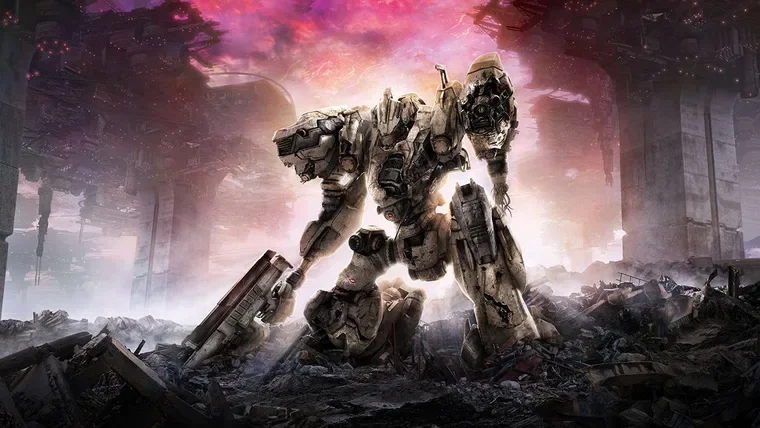
Why Fires of Rubicon surprised me—and why Armored Core VII is the one announcement I want most this year
—
There are certain developers everyone seems to adore, yet no matter how hard you try, you cannot quite see what everyone else sees.
For me, that developer has always been FromSoftware.
That was never because I thought its games were bad. Quite the opposite. I could appreciate the ruined beauty of Dark Souls, the precision of Sekiro, and the sheer scale of Elden Ring. Every new release became an event. Every boss fight seemed to generate a thousand stories, memes, and arguments before I had even reached it.
But admiration is not the same as enjoyment.
Whenever I tried to enter one of those worlds, something failed to click. The deliberate combat, cryptic progression, oppressive atmosphere, and constant sense that I was being punished for existing kept me at a distance. I respected the craftsmanship, but I rarely felt compelled to keep playing.
Then I climbed into a giant robot.
Armored Core VI: Fires of Rubicon did not merely surprise me. It changed the way I thought about FromSoftware.
It turns out I did not need a bonfire, a spectral horse, or a sword twice the size of my body to understand what people love about this studio.
I needed boosters, shoulder-mounted missiles, and several tons of heavily armed industrial machinery.
This Is Not Dark Souls With Robots
Before playing Armored Core VI, I had absorbed the same simplified description that surrounded much of its release: this was supposedly FromSoftware’s mech series filtered through everything the studio had learned making Souls games.
That description is understandable, but it undersells what makes Armored Core special.
Yes, the game has demanding boss battles. Yes, careless aggression gets punished. Yes, there are encounters that force you to learn patterns, reconsider your approach, and return with a better plan.
But Armored Core VI does not feel like Dark Souls with robots.
Its energy is completely different.
Instead of cautiously walking through a decaying castle and wondering what horror waits around the next corner, I was launching across industrial battlefields at frightening speed. I could ascend above enemies, rain missiles onto them, drop behind cover, fire a charged shot, and close the remaining distance with a boost-powered melee attack.
The game is fast, loud, mechanical, and wonderfully direct.
You receive a mission. You prepare your machine. You deploy. Something enormous explodes.
Sometimes that is exactly what I want from a videogame.
Missions Gave Me a Reason to Keep Playing
One of the biggest differences for me was the mission structure.
Rather than asking me to commit to another vast open world, Armored Core VI breaks its campaign into focused sorties. Some missions are short assaults. Others involve defending a location, hunting a particular enemy, infiltrating a facility, or fighting another Armored Core pilot.
This structure made the game remarkably easy to return to.
I could sit down intending to complete one mission and stop. Of course, I rarely stopped after one mission.
A successful sortie usually led back to the garage, where a new weapon, frame component, or booster was waiting to be examined. That led to testing a different configuration. Testing the configuration naturally meant accepting another mission. Before long, the evening had disappeared.
The missions may be compact, but they create an addictive rhythm:
Prepare. Deploy. Fight. Earn. Rebuild. Repeat.
There is very little wasted time between deciding what I want to do and doing it.
For someone who sometimes finds modern games exhausting before they have even finished explaining their progression systems, that directness felt refreshing.
The Garage Is the Real Game
The first time I opened the assembly menu, I expected it to be something I would tolerate between missions.
Instead, it became one of my favorite parts of the game.
Every component affects how your Armored Core moves, fights, and survives. Legs determine far more than appearance. Generators influence your energy capacity and recovery. Boosters change your mobility. Weapons add weight, consume energy, occupy different hardpoints, and behave differently at various ranges.
At first, the number of statistics can seem intimidating. The important revelation is that Armored Core VI does not expect you to understand everything immediately.
It encourages experimentation.
A heavy build can absorb punishment and carry devastating weapons, but it may struggle to evade fast attacks. A lightweight machine can dance around the battlefield but might disintegrate after a few mistakes. Reverse-jointed legs create a different sense of movement. Tank treads can turn an Armored Core into a mobile weapons platform.
Changing a few components can make the same mission feel like a completely different game.
That was the moment Armored Core VI truly clicked for me. I stopped viewing a failed mission as a judgment of my ability and started treating it as an engineering problem.
Maybe I did not need faster reactions.
Maybe I needed different legs.
Perhaps the rifle I liked was ineffective against the enemy’s defenses. Perhaps I had built a machine that looked impressive but could not generate enough energy to support the way I wanted to move. Perhaps I had become emotionally attached to a loadout that simply was not working.
That process transformed frustration into curiosity.
Instead of asking, “Why can’t I beat this?” I started asking, “What can I build that will beat this?”
Difficulty Without the Same Sense of Punishment
Armored Core VI is not an easy game.
Some of its bosses stopped me cold. There were moments when the screen filled with missiles, warning indicators, laser fire, and enough visual chaos to make survival seem impossible. There were attacks I could not initially read and enemies that seemed capable of staggering my machine at the worst possible moment.
But the difficulty affected me differently than it does in the Souls games.
A failed attempt rarely felt like losing a long journey back to where I had died. The game let me retry major encounters quickly, and it often allowed me to reconsider my assembly before doing so.
That distinction mattered.
The game was not merely asking me to repeat the same actions more precisely. It was inviting me to reconsider the problem.
When victory finally came, it did not feel as though I had simply endured enough punishment. It felt like my machine and I had arrived at the answer together.
That might sound ridiculous. It is still a fictional robot assembled through menus.
But after enough missions, the machine begins to feel personal.
Its weapons reflect your preferences. Its movement reflects your habits. Its paint scheme reflects either your artistic taste or your willingness to create the ugliest military hardware imaginable.
It is not simply the character you control.
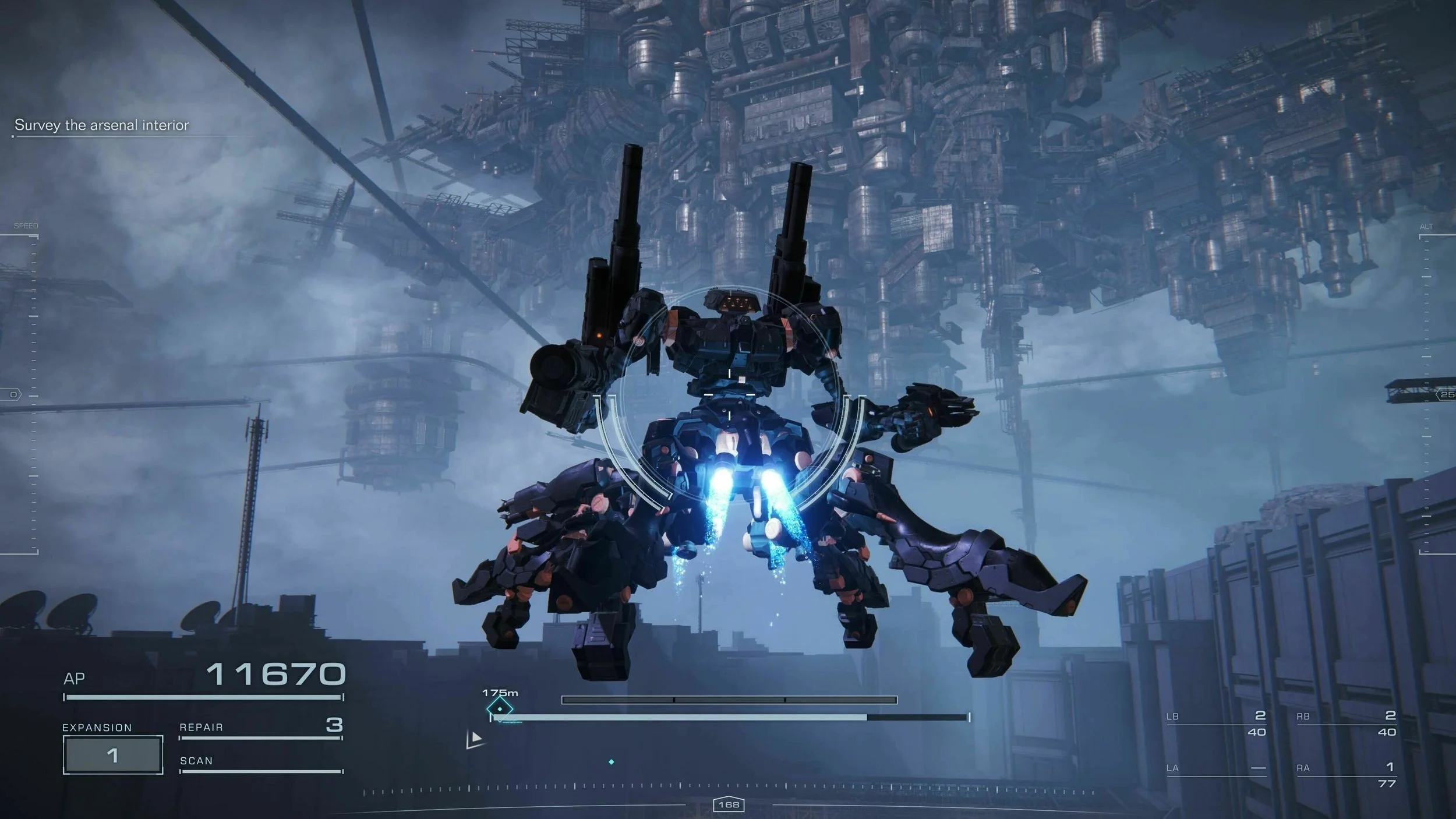
It is something you built.
Power Without Invincibility
Many action games struggle to make the player feel powerful without making combat meaningless.
Armored Core VI manages both.
Your machine can cross enormous distances in seconds. It carries enough ammunition to erase conventional military units almost casually. Missiles spiral through the air while energy blades cut through armored targets. Buildings, factories, and colossal machines create a sense of scale that makes ordinary human conflict feel irrelevant.
You are clearly piloting something terrifying.
Yet the game never allows that power to become completely comfortable.
Another Armored Core can destroy you. A specialized weapon can dismantle a poorly considered build. A boss can dominate the arena until you understand its movements. Even weaker enemies become dangerous when they attack in the right combination or catch you without enough energy to escape.
That balance made nearly every successful mission satisfying.
I was powerful, but I was never guaranteed victory.
Why My VR Background Makes the Cockpit Matter
My background with VR probably explains part of why Armored Core VI grabbed me so quickly. I have always been drawn to games that create a convincing sense of inhabiting a machine rather than simply controlling an avatar. Armored Core VI is played on a traditional screen, but its layered HUD, radio chatter, warning tones, rapid changes in altitude, and enormous industrial spaces still produce that same fantasy of being sealed inside a cockpit.
It is not about wishing the game were in VR. The speed and visual intensity would make that a very different experience. What interests me is the way the game makes the machine feel like an extension of the player. The assembly screen builds ownership, the movement creates physical momentum, and every sortie feels like entering a vehicle I helped design.
That is also one reason an Armored Core VII excites me so much. I want to see how FromSoftware pushes that feeling of mechanical presence further on traditional hardware—through stronger cockpit-style presentation, deeper audio, more detailed machines, and battlefields that make an Armored Core feel both impossibly powerful and very small.
A World Built From Steel, Fire, and Corporate Misery
I also did not expect to become as invested in Rubicon as I did.
The story is delivered through briefings, radio conversations, mission descriptions, and the voices of characters who are often nowhere near the battlefield. At first, many of them appear to be little more than employers, handlers, rivals, or disembodied corporate representatives.
Gradually, personalities begin to emerge.
Relationships form through voices rather than faces. Pilots develop reputations. Factions reveal their priorities. The corporations treat destruction as a business expense while mercenaries search for purpose, profit, or survival inside the machinery of someone else’s war.
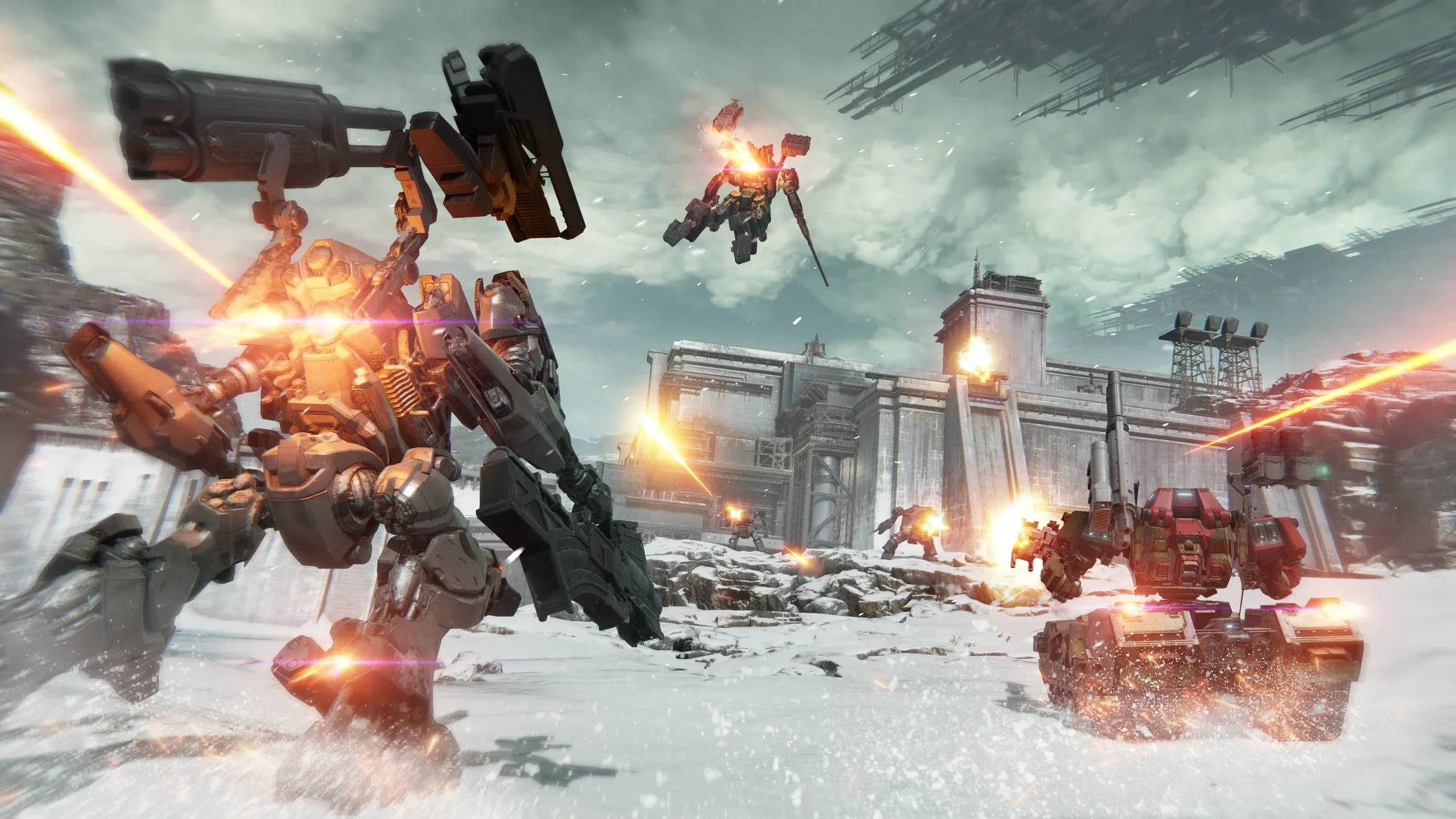
It is a cold world, but not an empty one.
The industrial environments also support that tone. Rubicon is filled with impossible megastructures, furnaces, refineries, frozen expanses, ruined cities, and weapons that appear to have been constructed by civilizations with no concept of reasonable scale.
This is science fiction built from steel, concrete, exhaust, and corporate cruelty.
It feels less like a heroic space opera and more like being trapped inside a war economy that became too large for any individual to control.
The fact that you experience much of it from inside a machine only strengthens the effect.
It Finally Made Me Understand FromSoftware
I still would not call myself a Souls fan.
Playing Armored Core VI did not suddenly make me love every design choice in Dark Souls, nor did it erase the reasons those games have struggled to hold my attention.
What it did was help me understand the devotion FromSoftware inspires.
I finally experienced the studio’s ability to build a game around mastery without making that mastery feel purely mechanical. I understood the pleasure of confronting something that initially seemed impossible and slowly reducing it to a collection of understandable decisions.
I also began to appreciate the confidence behind the design.
Armored Core VI does not constantly stop to reassure the player. It trusts that experimentation will produce understanding. It allows failure to become information. It creates systems with enough depth to reward obsession but enough clarity to support someone encountering the series for the first time.
Most importantly, it understands that difficulty is only worthwhile when overcoming it feels meaningful.
I may not have found that connection through a Souls game.
I found it on Rubicon.
The One Announcement I Want This Year
There will inevitably be plenty of major announcements at Gamescom, Tokyo Game Show, and The Game Awards this year.
There will be sequels, remakes, surprise revivals, enormous open worlds, and cinematic trailers for games that may still be years away. I am sure several of them will look spectacular.
But there is one announcement I want more than any other.
Armored Core VII.
Not because I want FromSoftware to turn the series into another Souls game.
I want another Armored Core.
My years of following VR have made me especially sensitive to presence—the sensation that a game has transported you somewhere and given you a body or machine that feels tangible. Armored Core VI achieved that without a headset, which makes me eager to see how much more convincing the next game could become.
I want another garage in which I can lose an unreasonable amount of time comparing generators and pretending I fully understand energy efficiency.
I want another campaign of compact missions that somehow turn a planned thirty-minute session into an entire evening.
I want more rival pilots, more impossible machines, more industrial skylines, and more corporations asking me to commit war crimes in exchange for enough credits to purchase a slightly better shoulder cannon.
I want another soundtrack that makes adjusting a loadout feel like preparing for the final battle of a lost cyberpunk anime.
Most of all, I want to experience that sense of discovery again.
Armored Core VI was not a game I expected to love. I approached it as someone largely disconnected from FromSoftware’s most celebrated work and unfamiliar with what made this older series so important to its fans.
It won me over anyway.
So, if a trailer begins at Gamescom, Tokyo Game Show, or The Game Awards with static, distorted radio chatter, and the sound of a massive engine starting somewhere in the darkness, I will immediately become unreasonable.
Put the Roman numeral VII on the screen.
Let me return to the garage.
I am ready to climb back into the machine.
Editorial note: Armored Core VII has not been announced. This article reflects the author’s personal hope for a reveal at Gamescom, Tokyo Game Show, or The Game Awards.
